Zone 2 helps reduce Body Fat Percentage
Zone 2 is a steady, comfortable exercise intensity where your body can keep up with its energy needs without stress.
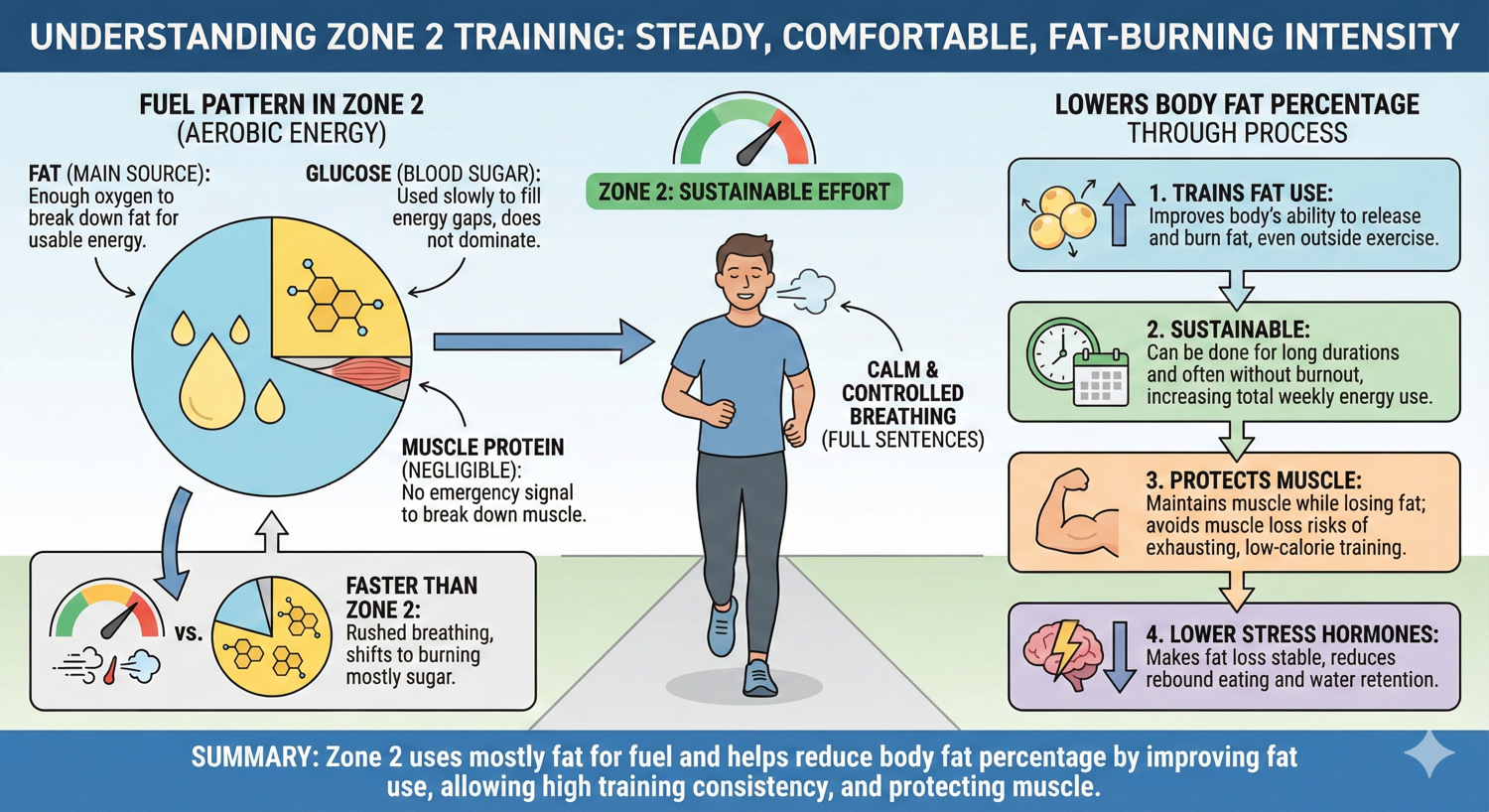
In Zone 2, your body has enough oxygen to meet its energy needs. Because of that, it prefers to burn fat for fuel and uses sugar more slowly.
Your breathing is deeper than at rest, but still calm and controlled. You can speak in full sentences without needing to pause for breath.
If you go faster than Zone 2, breathing becomes rushed and the body shifts toward burning mostly sugar. In Zone 2, that shift does not happen.
In Zone 2, your body uses a mix of fuels, but the balance matters.
Fat is the main energy source. Because the effort is not rushed, your body has enough oxygen to break down fat and turn it into usable energy.
Glucose, or blood sugar, is still used, but at a slower rate. It fills the gaps when energy demand rises slightly, but it does not dominate.
Muscle protein is not meaningfully used. There is no emergency signal that would make the body break down muscle for fuel.
So the fuel pattern is simple: mostly fat, some glucose, almost no muscle.
(see full image)
Zone 2 lowers body fat percentage through process, not drama.
First, it trains your body to be better at using fat. Repeated Zone 2 work improves how easily fat can be released from fat tissue and burned by muscles. Over time, more of your daily energy comes from fat, even outside exercise.
Second, Zone 2 is sustainable. You can do it for long durations and repeat it often without burning out. This raises total energy use across the week without triggering excessive hunger or recovery stress.
Third, Zone 2 protects muscle. Maintaining muscle while losing fat is what lowers body fat percentage. Hard, exhausting training combined with low calories often risks muscle loss. Zone 2 does not.
Fourth, Zone 2 keeps stress hormones lower. Lower stress makes fat loss more stable and reduces rebound eating and water retention that mask real progress.
Zone 2 uses mostly fat for fuel and helps reduce body fat percentage by improving fat use, allowing high training consistency, and protecting muscle.
- Aerobic zone: Exercise intensity where oxygen delivery is sufficient to meet energy demand. Fat is the main energy source.
- Anaerobic zone: Exercise intensity where energy demand exceeds oxygen delivery. Glucose is the main energy source. Anaerobic does not mean “no oxygen at all.” It means oxygen is insufficient for the required power output. Here, Lactate accumulates faster than it can be cleared.